

Da's toch al gebeurdmeiborg schreef:Ik ben heel benieuwd naar hoe het gaat bevallen


Nog gefeliciteerd Wouter

Moderator: Beheerdersteam
Da's toch al gebeurdmeiborg schreef:Ik ben heel benieuwd naar hoe het gaat bevallen
 Zo disrespectvol zou ik ook niet spreken over een ander hoor! (waar ze bij zijn)
Zo was het bij mij ook vorige keer Beetsterzwaag (2009), filteren en hup de auto inJoland schreef:Jammer, was nl. erg benieuwd naar dit ontwerp. Vorig jaar was er overigens ook iemand die een setje hoorns had meegenomen die die ochtend pas in elkaar waren gelijmd...

Goed ideewouter schreef:En lekkere budget schroefjes. Zwarte gipsschroeven van de action. Voor de tweeter afgedraaid
... ik kan al bijna een zachte 'pling' horen van een schroefkop die afbreekt (been there done that ).
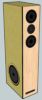


Er is niks mis met het verhaal in onze bieb, behalve voor wie verslaafd zijn aan computers die denken dat ze het beter weten dan ikke....indibana schreef:Een vraagje over je berekening van de TL:
Ik kom op internet tegenstrijdige info tegen. Op zelfbouwaudio is er een uitleg en berekening waar ervan wordt uitgegaan, dat de TL direkt na de driver start. Op andere plekken wordt het "doodlopende stuk" genoemd. Als je de drivers op genoemde beste plekken zet, dan valt de keuze op 1/3 van de line en evt voor de tegenfase op 1/5 van de line. Volgens het laatste genoemde zou de line dan starten bij het dode eind. Klopt mijn redenatie?
Als ik even reken kom ik op een (gecorrigeerde) line van ongeveer 134cm (rekenmethode zelfbouwaudio.nl) . 1/3e ligt dan op ong. 44 cm. Jouw hebt het over "tenminste op 17 cm in de lijn moest zitten, liefst 21,5 cm na de start van de lijn." en ergens anders over een TL van 120 cm. Als een ongecorrigeerde line 144 cm is, dan is 120 cm niet de 1/10e line, die je ook nog ergens noemt. Omdat dit voor mij nieuwe materie is en ik wellicht rekenfouten maak, zou ik graag jouw berekening en overweging mogen zien.


Vanavond hoop ik lekker te gaan stoeien met filteringweidok schreef:lees deze link maar eens GOED door artikel over TL ontwerpen !!!
http://www.t-linespeakers.org/design/MJ ... index.html
dit stukje vooral....
Speed of sound in a stuffed line
The TL resonates at one quarter of the wavelength of the frequency set as the tuning point.
The wave length depends on the speed of sound.
Damping of the pipe will slow down the speed of sound a little, and since the wave length depends on the speed of sound, a slight lowering of the tuning frequency will occur.
However, this is not a dramatically reduction at all. A couple of Hz is what you will gain at the most.
It is very difficult even to be able to measure if the tuning frequency has changed, as the impedance curve is damped and flat.
Your local altitude and the temperature of the air has more of an impact on the tuning frequency than the stuffing.
Design parameters
--------------------------------------------------------------------------------
The most important of the design parameters is the design of the cabinet:
Length and geometry to set the tuning frequency -- Tuning frequency is set by the length of the line and the geometry.
For a straight line, it is simply a quarter wave of the frequency.
A tapered line (opening has a smaller area than the closed end of the pipe) is the smallest possible enclosure for the same frequency. A tapered line is very good at taming the unwanted upper harmonics. The output from the opening is broader and with slightly less output, compared to the straight line.
An expanding line will be the longest line for the same tuning frequency. It has a high output level, unfortunately the frequency curve is very uneven.
If you mass load the straight line, by making the area of the opening smaller than the cross section, the line will be shorter than the straight line for the same tuning frequency.
A larger volume will, in general, increase the bass and also lower the tuning frequency a bit.
Driver offset -- In a straight TL, moving the driver down approximately one third of the line will eliminate half the peaks in the higher harmonics. This is a very useful, old trick to tame the frequency response. The cost is slightly less bass.
Stuffing to dampen nulls, ripples and impedance peaks --
The last option is stuffing, which should be relatively light so as not to attenuate the opening output too much.
Stuffing will make the frequency curve smoother and dampen impedance peaks.
The draw back is less bass. The balance between damping peaks and nulls, and still benefiting from the opening output is clearly seen in the MathCad worksheets.
Driver Thiele-Small Parameters
--------------------------------------------------------------------------------
Qts -- I use a Qts value of 0.35 to distinguish between high and low Qts. You might have another definition.
Drivers with a high Qts perform better than driver with low Qts in a quarter wave design.
On the other hand, the lower Qts driver seems to require less volume, thereby resulting in a smaller enclosure.
Low Qts drivers have a roll off that starts earlier than high Qts drivers, and drivers with a moderate or high Qts will often result in the best low end performance.
But this is also a matter of taste and preferences. "Good sound" is defined by you only.
The output from the opening is broader with high Qts drivers, compared to low Qts drivers that have a narrower output from the opening.
Drivers with a Qts lower than 0.30 seem to be difficult to control in a TL.
Fs -- In a properly designed TL you can expect the bass to reach down half an octave — or maybe more - below the driver Fs.
Vas -- In a TL, just like any other enclosure, Vas is a deterninant of the total enclosure volume.
A good example of this can be seen by modeling an isobarik driver.
The cross-section of the line halves just as the Va does (ie enclosure volume halves -- line length stays the same).
Drivers with low Vas may require a box so small that at the required length the cross-section of the line is inadequet to create a good TL.
It should be noted that a TL. in general, is fairly tolerant of differences in volume -- in this way similar to a sealed box with a Q below 0.707 (maximally flat/Butterworth)
Starting Point
--------------------------------------------------------------------------------
A starting point could be to tune the enclosure 5-10 Hz above the driver's Fs if it is a low Qts driver.
Tune the enclosure 5-10 Hz lower than the driver Fs, if the Qts is high. However, this is a guideline only.
As you move the tuning frequency upwards, the output from the opening increases.
And, not surprisingly, if you lower the tuning frequency you will at the same time also lower the output level from the opening.
Set the cross section to 2-3 times Sd* at the closed end, and use a tapered geometry in the ratio 1:10. Or mass load the line by reducing the area of the opening, or use a port like in Martin's ML projects, to help control the higher harmonics.
If your design allows it, set the driver down one fifth to one third of the line length -- play with the offset, sometimes small changes can be significant.
Every design will always will be a compromise of "competing" characteristics.


